Stories from home

How do I clean and maintain my CPAP machine? A family story at 91

At 91, he breathed through CPAP tubing filled with moisture

Shared with the family's permission. Names are withheld.

To clean and maintain a CPAP machine, follow its manual: clean the mask cushion and water chamber daily, and the tubing, headgear and mask frame weekly. Use distilled water only in the humidifier chamber, let washed parts air dry away from sunlight, and follow the manufacturer's filter and replacement schedule. Your RT can show you the routine for your model.

She noticed the tubing first. It was filled with moisture, the kind that settles and stays when nobody has taken the hose apart and let it dry. Then she looked at the rest of it: the mask, the water chamber, the whole kit that sat beside her father's bed. None of it had been cleaned. It had been used that way for about two to three years.

Her father is 91. Every night he breathed through that tubing.

She called what she found horrendous, and the word stayed with her. The worry that followed was worse. His nights had been rough and he was not sleeping well, and now hers were rough too. She lay awake thinking about the machine in his room and everything she had not known to ask about it.

The call

She called us because she wanted the machine replaced, and she wanted it done quickly. Our team went to the house.

Our respiratory therapist looked over the old setup and asked the question that matters most with any home breathing equipment: how often is it cleaned? The answer was that it never had been. Nobody had shown the family how. The therapist was shocked. The point was never to find someone to blame. The point was what to do next.

What his doctors were watching

Her father lives with bronchiectasis, a lung condition that makes it hard to clear mucus, and he also has trouble swallowing. Several specialists follow his care. In August his pulmonologist reviewed a sputum result and judged that, given how he was doing at the time, the organisms found were most likely living in his airways rather than causing an acute infection. A culture taken in September showed a light growth of ESBL-positive E. coli and Pseudomonas aeruginosa, and the family says he completed an eight-day course of antibiotics. His lungs stay in his doctors' hands.

The old equipment was never cultured, so no one can say whether it had anything to do with what was found in his sputum. What the family could do was make sure that from now on, the air reaching him passed through clean equipment.

The afternoon at the house

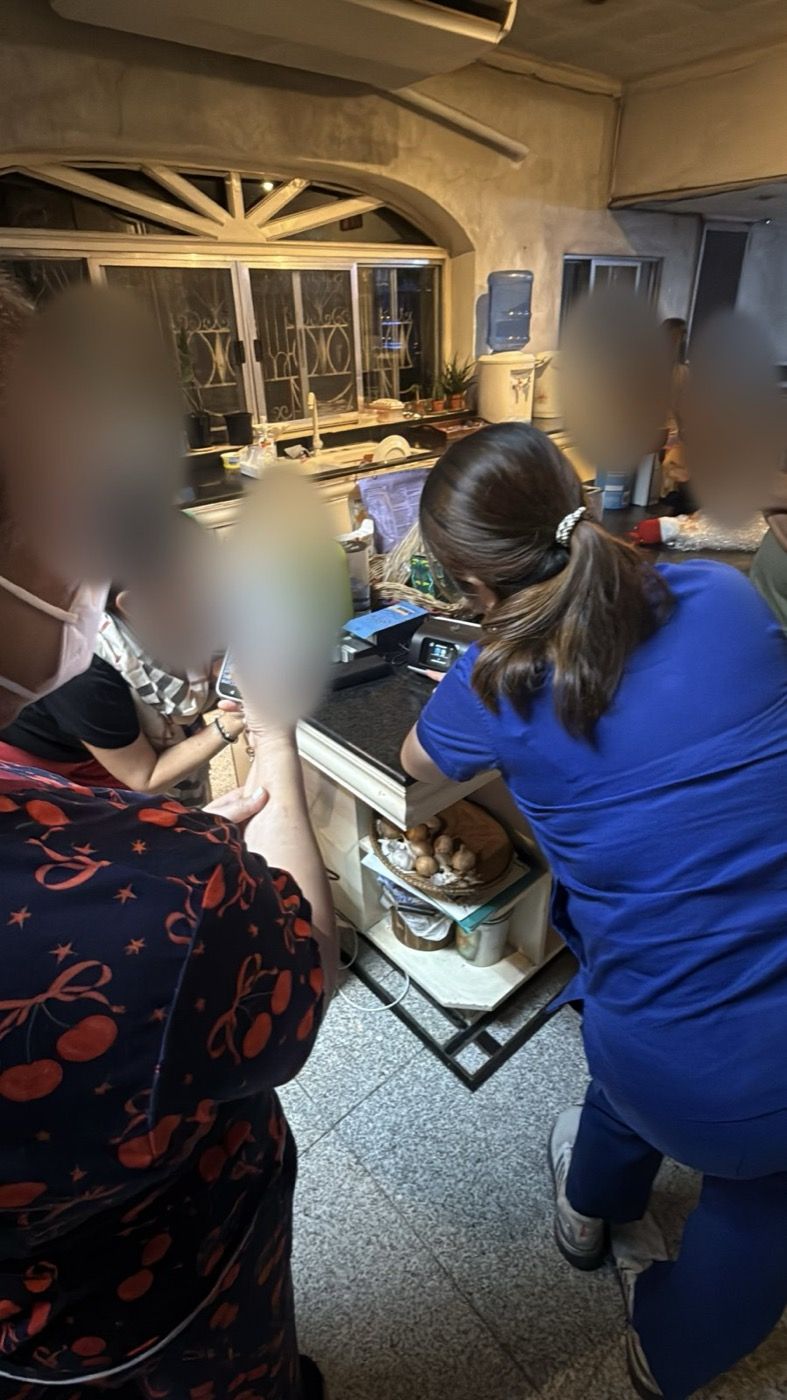
Our team replaced the machine and set it up beside him. Then the therapist sat down with his daughter and went through the kit piece by piece, the way you would show someone how to care for anything they mean to keep.
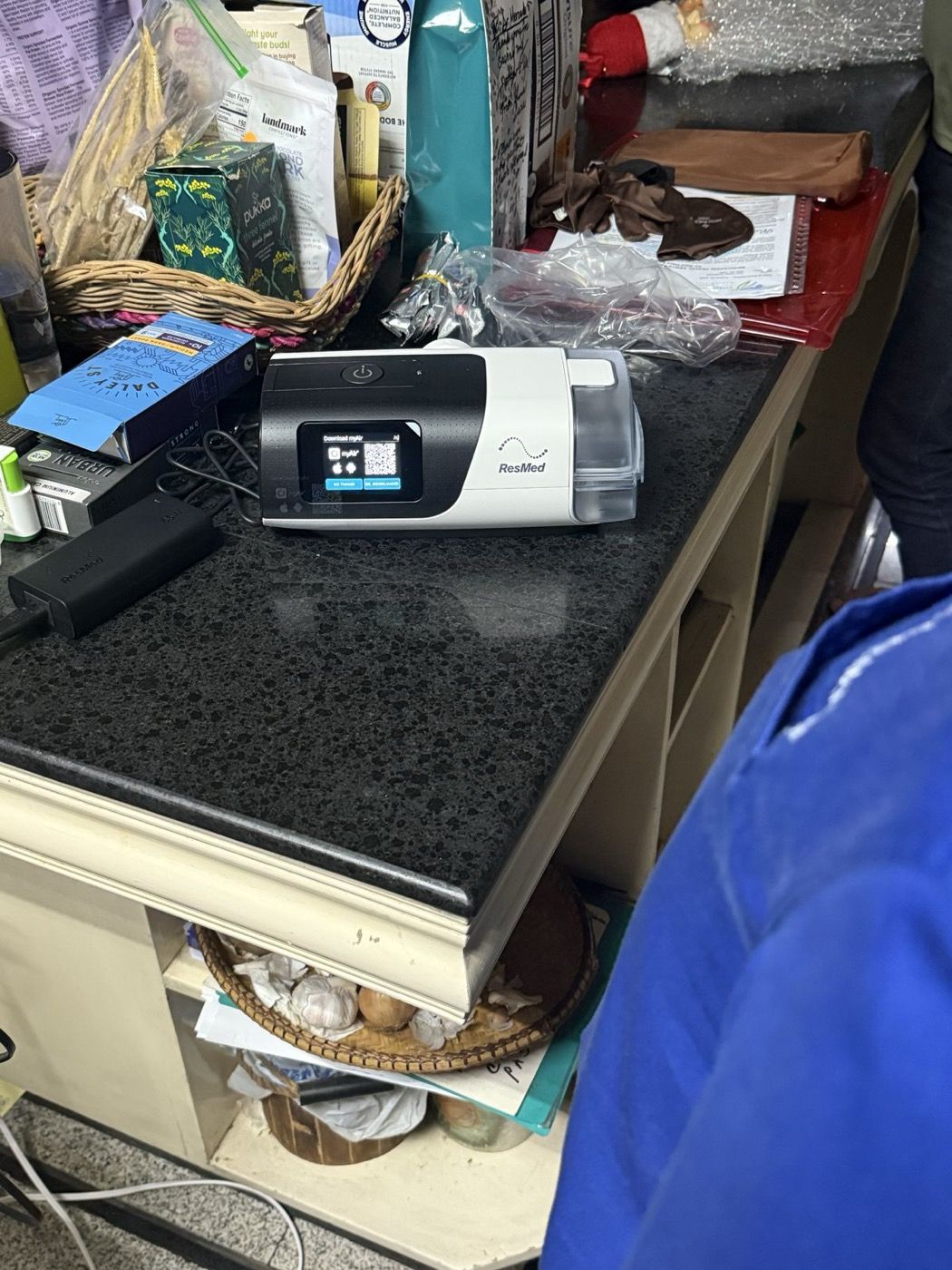
The new CPAP machine set up on the kitchen counter
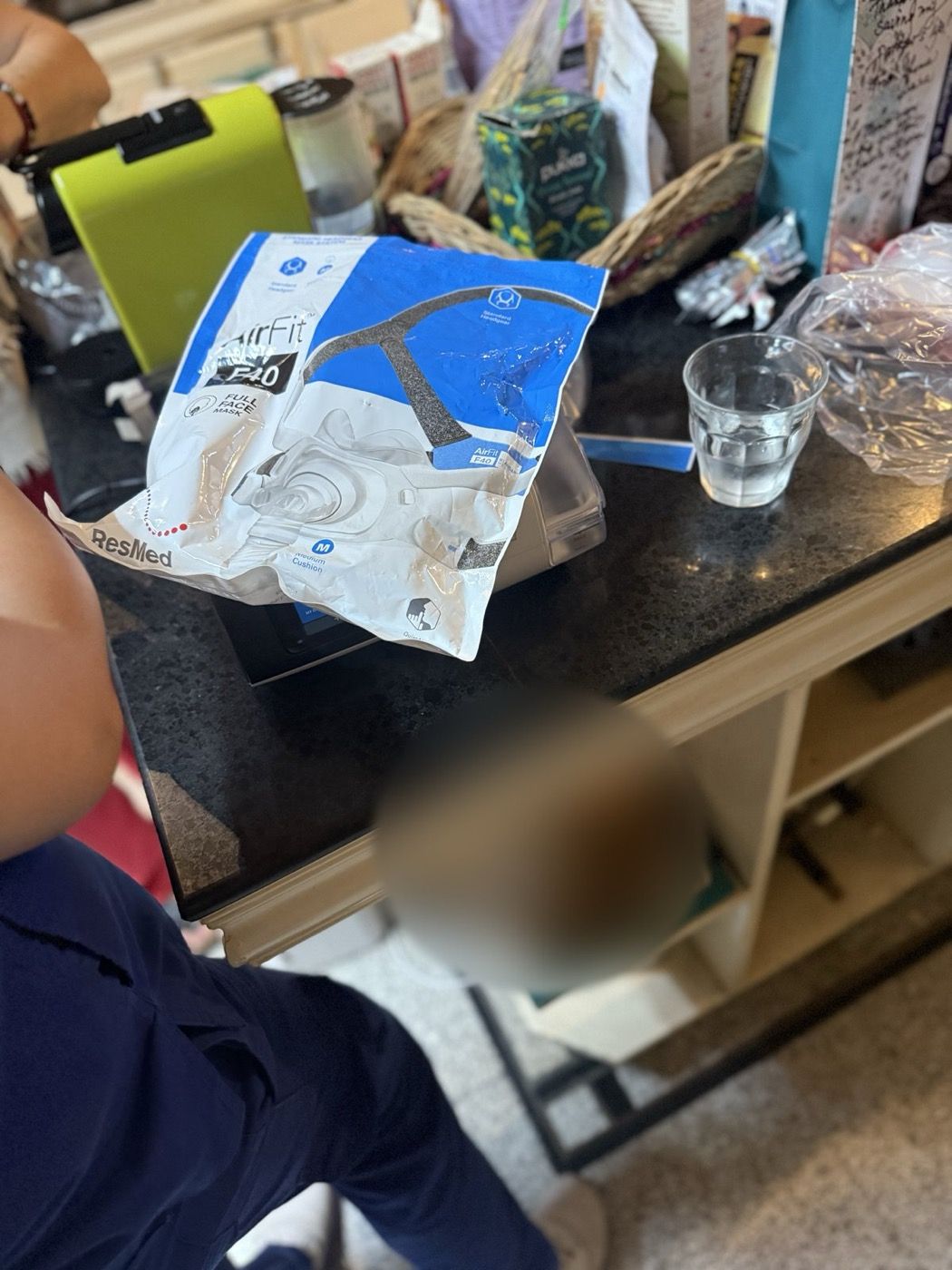
A new CPAP mask package beside equipment on a counter
A respiratory therapist in navy scrubs demonstrates CPAP equipment to family members at a counter

Here is the mask cushion. Here is the water chamber. Here is the tubing, and here is how you hang it so it dries all the way through. A mild soap, warm water, a proper rinse. Distilled water in the humidifier. For his setup, the routine is simple once you have seen it done: the mask cushion and the water chamber every day, the tubing and headgear once a week.
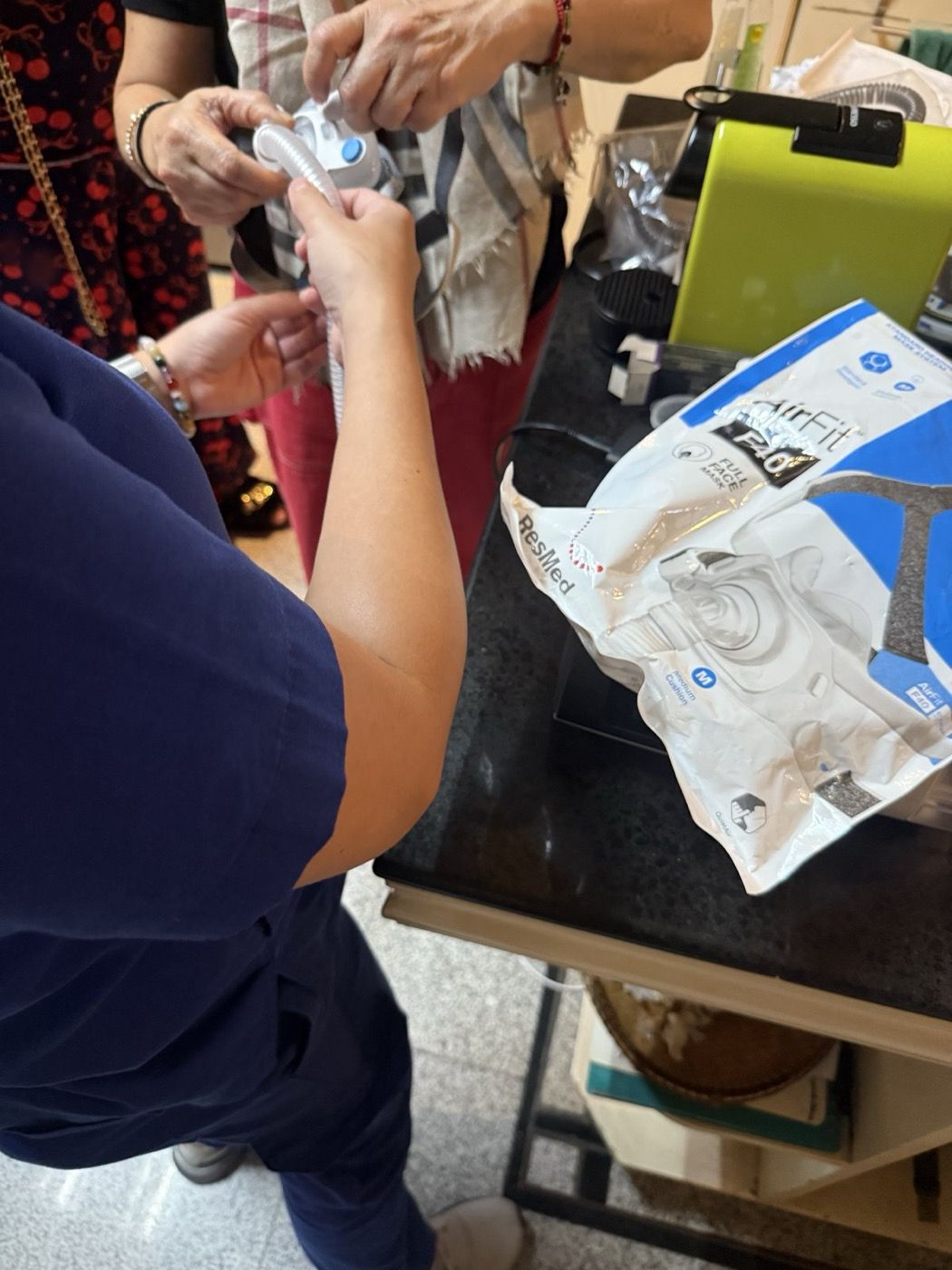
Hands handle CPAP mask parts during a home demonstration

While they worked, the therapist noticed something else. Her father breathes through his mouth. A nasal mask had been planned. The therapist fitted a full-face mask, which covers both the nose and the mouth, instead.

The first nights in it felt strange to him, as any new mask does. So they took it slowly. For about a week he wore the full-face mask only during his afternoon and daytime naps, until it stopped feeling new. After that he began wearing it at night, and he now wears it every night.

His daughter learned to fit it herself. She knows where the straps sit, how snug is snug enough, how to check the cushion before he lies down. The equipment in his room is no longer a mystery she worries about in the dark. It is something she knows how to look after.

Now

She is very happy, and very pleased. The fear that kept her up has eased into routine: a rinse in the morning, a chamber left to dry, a hose hung over the rail.

"I finally know what I'm doing, and I know he's breathing through something clean."

We asked what she would tell other families bringing a parent home on a machine.

"Be sure to give your caregivers proper instructions, and educate them properly."

Then she added the part she learned the hard way. Make sure whoever looks after your loved one has actually been taught how the equipment is cleaned and maintained. And get professional help, because it is your loved one's life.

Most evenings now, before her father settles in for the night, she lifts the tubing to the light and looks through it. It is clear.

If someone you love uses a CPAP or BiPAP machine at home and nobody has shown your family how to care for it, message us. A licensed respiratory therapist can walk you through it at home.

How often should I clean a CPAP mask, tubing and other parts?

Follow the frequency in your machine's manual and use this general schedule: clean the mask cushion and water chamber daily, and clean the tubing, headgear and mask frame weekly. Check the same manual for filter care and replacement timing. Your RT can show you how the instructions apply to your model.

General CPAP cleaning and maintenance schedule
PartFrequencyGeneral guidance
Mask cushionDailyClean according to your machine's manual.
Water chamberDailyEmpty, clean and refill as directed by the manual. Use distilled water only in the chamber.
Tubing, headgear and mask frameWeeklyClean as directed by the manual and let washed parts air dry away from sunlight.
FilterPer manufacturerClean or replace only as directed for your model.
Replaceable partsPer manufacturer scheduleReplace each part on the schedule provided by the manufacturer.

For a manufacturer example, read ResMed's CPAP equipment cleaning guide. Your own machine's manual controls your routine.

What should I do if there is water or moisture in CPAP tubing?

If you find moisture or water inside the tube, start with the troubleshooting guidance in the machine's manual and ask your RT to review the setup for your model. Manuals can differ, so avoid guessing at machine adjustments from a general online answer. Your RT can point you to the manufacturer's instructions.

Does a CPAP humidifier need distilled water?

Use distilled water only in the humidifier chamber, and follow the manual for filling, emptying and cleaning it. The water instruction applies to that chamber, while the mask and tubing follow their own care directions. Your RT can show you the correct process for your equipment.

How should I dry CPAP parts and when should I replace them?

After cleaning, let parts air dry away from sunlight, following the manual's handling instructions. Replace components according to the schedule set by the equipment manufacturer, since timing differs among parts and models. Check the manual for your filter, mask, chamber and tubing, and ask your RT to show you where that schedule appears.

Where can I get CPAP cleaning help in the Philippines?

An RT can demonstrate the manufacturer's cleaning instructions for the specific device in the home where it is used. For CPAP cleaning help in the Philippines, see Respyre's CPAP home setup with an RT and confirm your address and a licensed RT are available before arranging a visit.

What are common CPAP cleaning questions?

These questions cover cleaning frequency, water in the humidifier, filter care and part replacement. Use the answers as general pointers only: your CPAP equipment manual controls the routine for your model, and your RT can demonstrate the relevant steps at home.

Use distilled water only in the humidifier chamber. Follow your machine's manual for filling, emptying and cleaning it, and ask your RT if you are unsure about your model.

Use the schedule in your machine's manual. General guidance is to clean tubing weekly and let it air dry away from sunlight; ask your RT to demonstrate the steps for your model.

Replacement timing depends on the part and model. Follow the manufacturer's schedule for filters, tubing, mask parts and the water chamber, and ask your RT to show you where the intervals are listed.

Filter care varies by model and filter type. Follow the manufacturer's directions for whether that filter should be cleaned or replaced, and ask your RT if you are unsure which filter you have.

A licensed RT can walk you through the manufacturer's instructions for your machine. Respyre includes one year of free cleaning, calibration and maintenance with each CPAP or BiPAP order paired with RT setup. Confirm address and RT availability before arranging a visit.

Where can I find more CPAP guidance and setup support?

For household coaching, start with your CPAP equipment manual and ask your RT to explain any model-specific steps. Explore CPAP caregiver education or our guide to helping someone you love start CPAP. Compare options in the CPAP and BiPAP catalog, review home respiratory services, or browse the CPAP and equipment FAQs for related practical information.

One year of CPAP and BiPAP maintenance

Every CPAP or BiPAP order paired with RT setup includes one year of free cleaning, calibration and maintenance.