He had been having trouble breathing and sleeping. So he went for a sleep test at a hospital, and during the test the hospital had him use one of its BiPAP machines. Right after the test, his doctor prescribed a BiPAP for home.
A prescription tells you what kind of machine you need. It does not tell you where to buy one, or who will show you how to wear the mask that comes with it. He worked that part out himself. He went shopping and checked several stores, comparing as he went. A week or two after the sleep test, he messaged us.
The message
What caught his attention was that a licensed respiratory therapist does the setup. He did more than notice it. He asked us outright for a licensed RT to be present when his machine was set up, and our team made sure one was.
He also came to us with a model in mind, the ResMed AirCurve 10 ST. We did not have that one. What we could offer was the AirCurve 10 ST-A, a variant in the same line with an automatic adjustment feature. He agreed, and the ST-A is the machine he bought.
So by the time the box was ready to go, two things were settled: the machine, and who would set it up.
Setup day
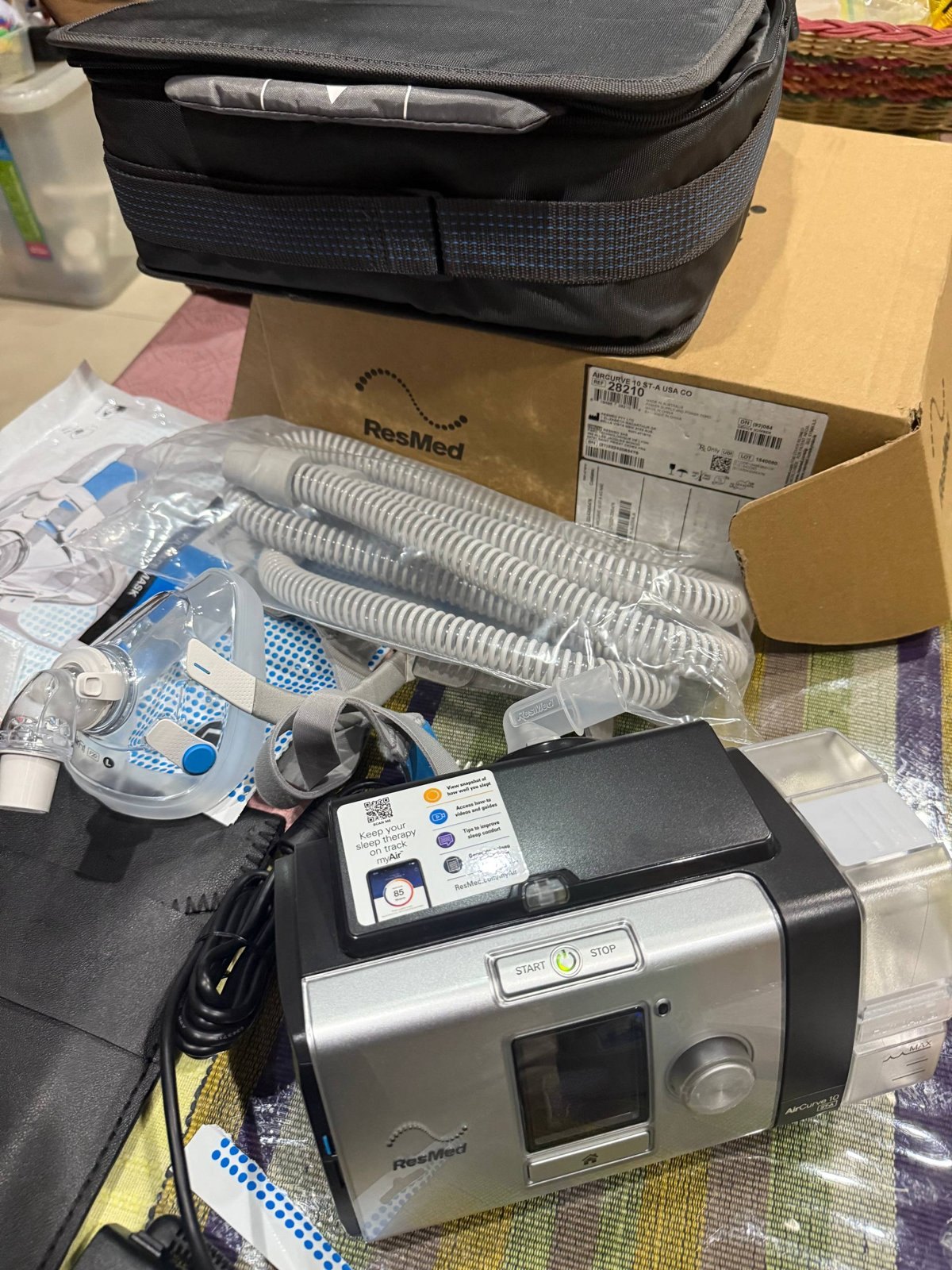
The ResMed carton made the trip over in the car. At his home the box came open, carry bag and all, and the kit was laid out together: the machine, the tubing and the mask. Before any of it went on, it sat there in plain view, everything he would be using at home.
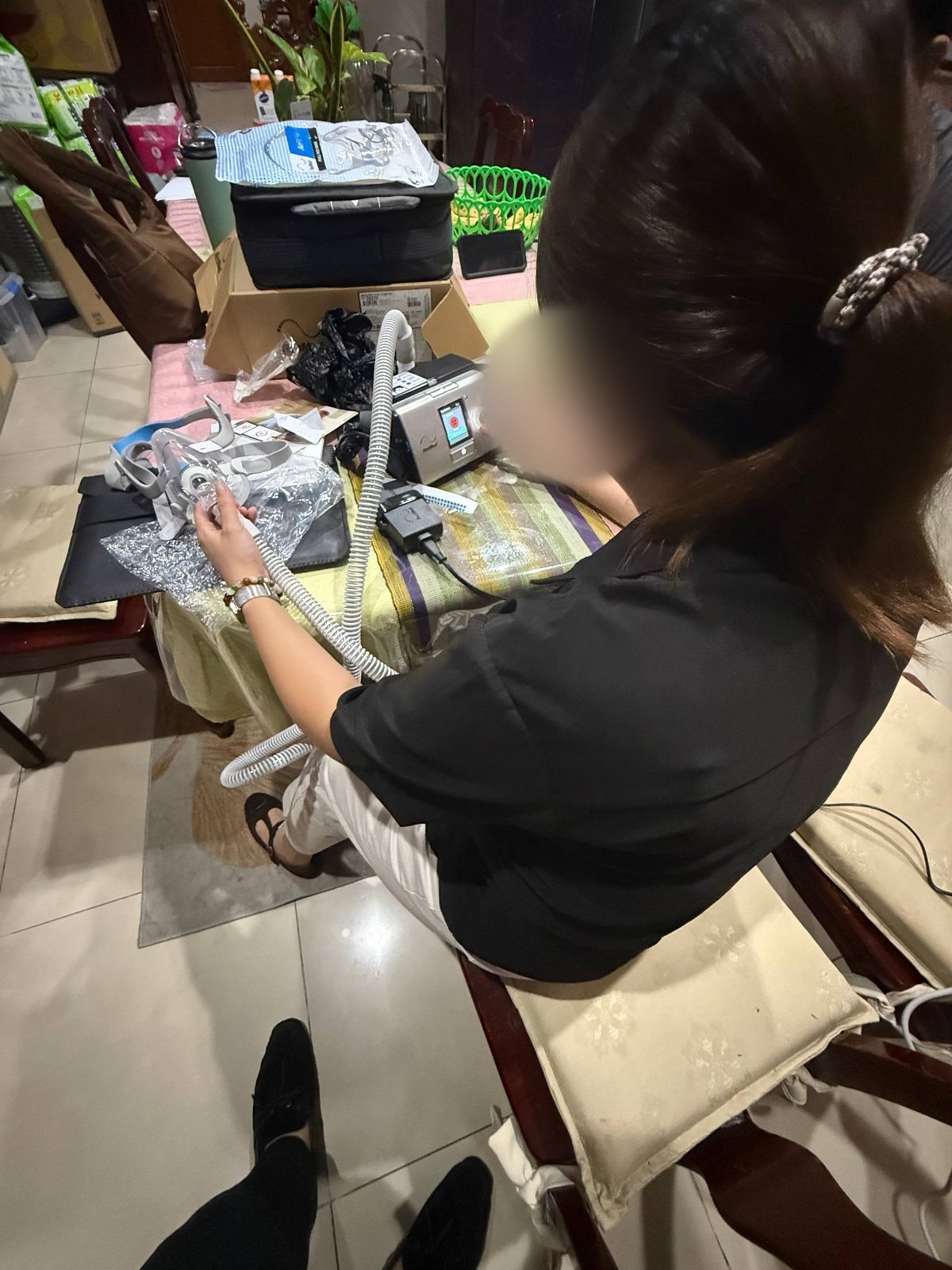
Our RT prepared the machine. Then came the mask. He stayed seated while the RT fitted it on him, and afterwards the two of them went through it together at the table.
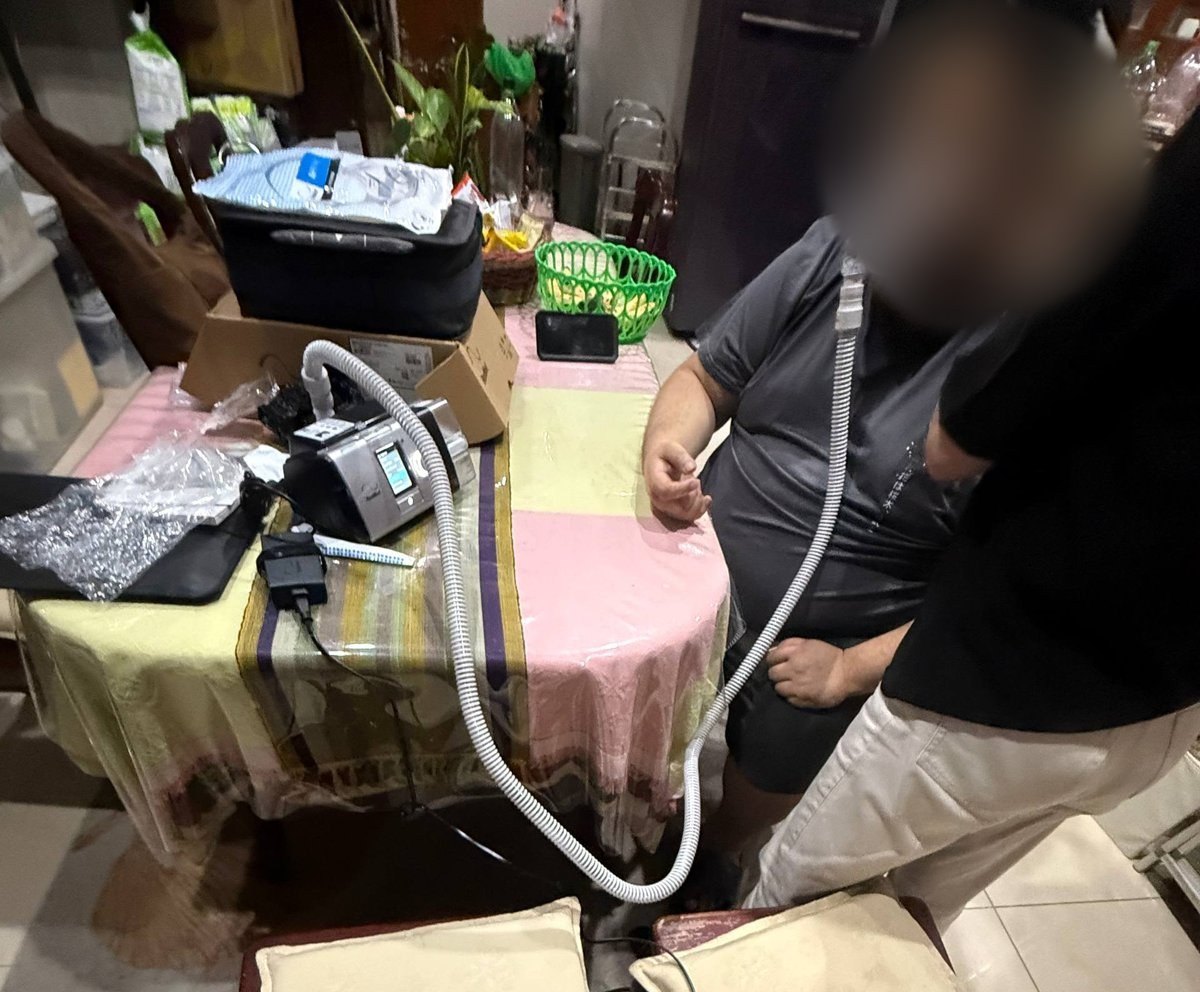
Of everything we explained, the part he found most useful was how the machine adjusts on its own. It was the feature that set the ST-A apart from the model he had first asked for.
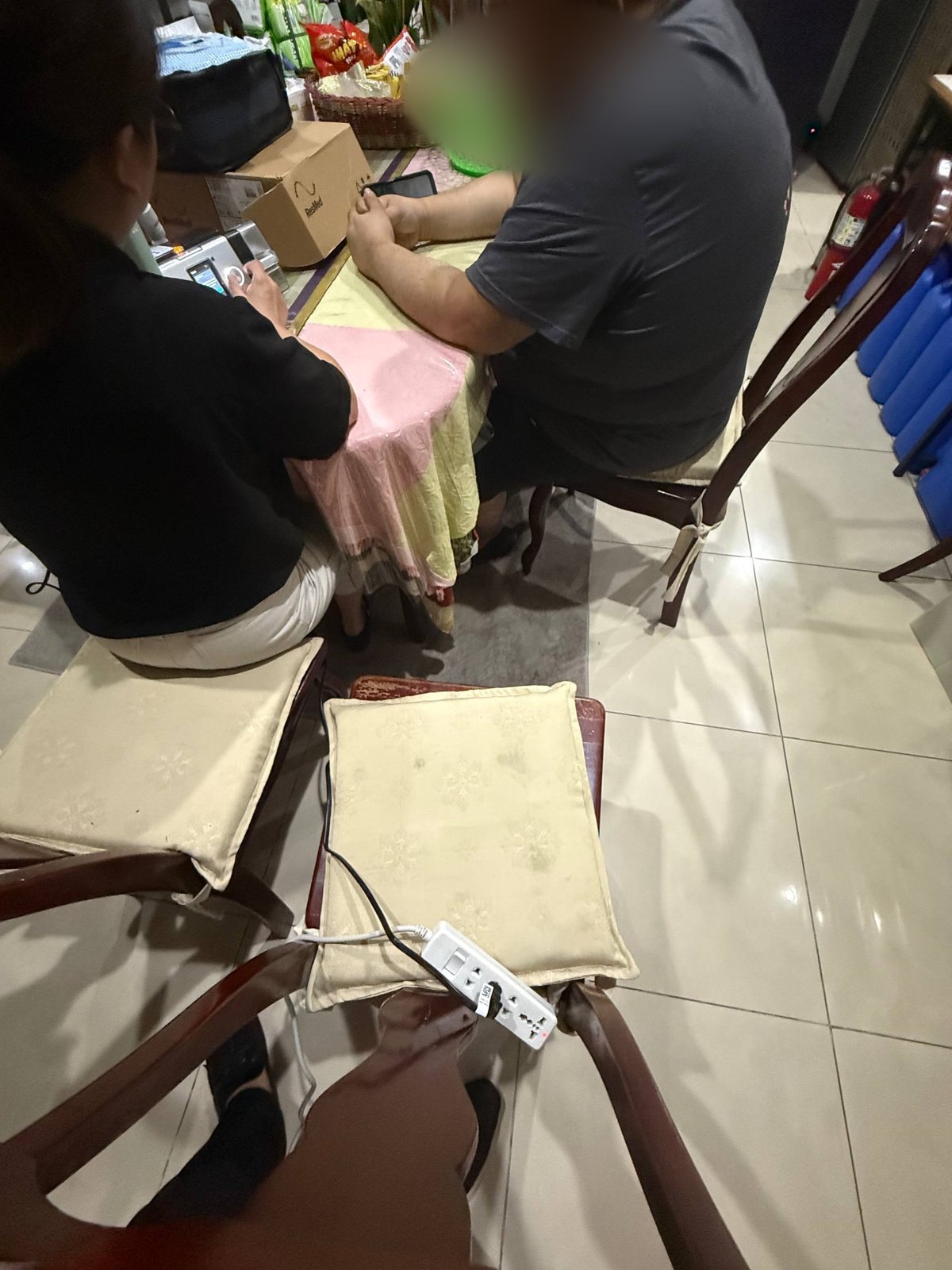
The fit took some work. There were a few leaks around the mask. The RT did not switch him to a different one. The same mask was refitted, and the leaks were fixed.
The first week
He had used a BiPAP during his sleep test, but having one at home was new to him, and the first few days were rough. The pressure felt too strong. He felt he could not breathe well, and his mouth was dry.
He did not wait it out quietly. He messaged us every day, and we messaged him too, asking how he had slept. For that first week the conversation ran both ways.
About a week after setup, we suggested he go back to his doctor. His doctor agreed and gave him new settings. He brought them to us, and our RT helped him enter his doctor's new settings on the machine.
Those settings were his doctor's call, made for him alone.
Now
He tells us he is sleeping soundly now and feels refreshed.
He was glad to have had help all the way through, from the RT he asked for at setup to the day his doctor's new settings went in.
What he wanted us to know was simple. The team was helpful every step of the way.